
Also known as family dentistry or primary dental care is a branch of dentistry that focuses on the prevention, diagnosis, and treatment of oral health issues in patients of all ages. General dentists are typically the first point of contact for individuals seeking dental care and provide a wide range of services to maintain and improve oral health. Here are some key aspects of general dentistry:
Regular visits to the dentist are essential for maintaining good oral health and preventing dental issues from becoming more serious. It is recommended that individuals visit their dentist at least twice a year for routine check-ups and cleanings, although the frequency of visits may vary based on individual needs and conditions.
Overall, general dentistry plays a critical role in promoting oral health and well-being for people of all ages.
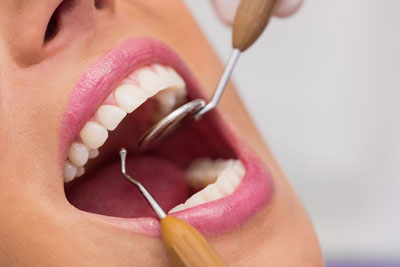
Aesthetic dentistry, often referred to as cosmetic dentistry, is a specialized branch of dentistry that focuses on enhancing the appearance of a person's teeth, gums, and overall smile. While general dentistry primarily addresses oral health and function, aesthetic dentistry is primarily concerned with improving the aesthetics of a patient's teeth and smile. Here are some key aspects of aesthetic dentistry:
Aesthetic dentistry is not just about achieving a beautiful smile; it also considers the patient's facial features, personality, and overall appearance to create a customized and natural-looking result. Aesthetic dentists work closely with patients to understand their goals and preferences, ensuring that the final outcome aligns with their expectations.
It's important to note that while aesthetic dentistry primarily focuses on appearance, it should not compromise the functionality and long-term health of the teeth and gums. Aesthetic treatments should be performed by qualified and experienced dental professionals who prioritize both aesthetics and oral health.

Root canal treatment, also known as endodontic therapy, is a dental procedure performed when the pulp (the innermost part) of a tooth becomes infected or damaged due to factors like severe tooth decay, cracks, or trauma. The procedure is done to save the tooth and alleviate pain.
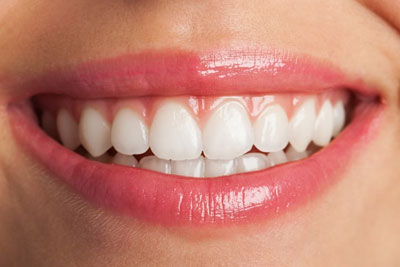
Tooth whitening, also known as teeth bleaching, is a cosmetic dental procedure designed to lighten the color of your teeth and remove stains and discoloration. It's a popular option for those who want a brighter, more attractive smile.
Your dentist applies a high-concentration whitening gel to your teeth and uses a special light or laser to activate the gel. This process may take about 1-2 hours and can produce significant results in a single session.
After the initial whitening, it's important to maintain your results. This involves practicing good oral hygiene, avoiding staining foods and beverages, and periodic touch-up treatments as recommended by your dentist.
It's important to note that teeth whitening may not be suitable for everyone. It may not work well on teeth with certain types of discoloration, and it's not recommended for people with certain dental conditions or allergies to whitening agents.
Additionally, teeth whitening is not a permanent solution, and the duration of results can vary depending on your oral care habits and lifestyle choices. Staining foods and drinks, smoking, and poor oral hygiene can cause the whitening effects to fade over time.

Dental veneers are custom made shells, they are designed to cover the front surface of the teeth to improve their appearance. An excellent solution for smile designing or smile makeover.
They can correct various dental problems like:
Ceramic Veneers They are durable and long-lasting veneers. They don’t chip, break or fracture or get dislodged over time.
Composite Veneers Also known as chair side veneer. more economical as compared to ceramic veneers. No lab is involved in this. Patient can go back with a new smile on the same day. However they stain and chip easily as compared to ceramic veneers.
Lumineers also known as no prep veneers. They are much thinner than conventional veneers. They are made of Ceramic or Porcelain, however since they are much thinner than ceramic veneers they can chip or break more easily.
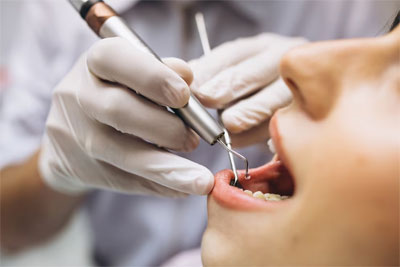
Implant dentistry is a specialized field of dentistry that focuses on the placement and restoration of dental implants. Dental implants are artificial tooth roots made of biocompatible materials like titanium. They are surgically placed into the jawbone to support replacement teeth or dental prostheses, such as crowns, bridges, or dentures.
Benefits of dental implants include improved chewing and speaking ability, enhanced aesthetics, and preservation of bone density in the jaw. They are considered a long-lasting and durable solution for tooth replacement when properly cared for.
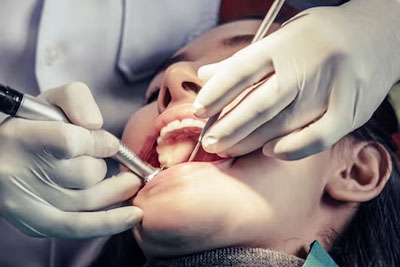
Surgical tooth extraction is a dental procedure that is more complex than a routine or simple extraction. It is typically performed for teeth that cannot be easily removed using simple extraction techniques. Surgical extractions are often necessary in cases involving impacted teeth, broken or fractured teeth, or teeth with curved or multiple roots.

Smile designing, also known as cosmetic dentistry or smile makeover, is a comprehensive approach to improving the appearance of a person's smile. It involves a combination of dental procedures and treatments to enhance the aesthetics of the teeth and gums. The goal of smile designing is to create a beautiful, harmonious, and natural-looking smile that complements the individual's facial features. Smile designing is a collaborative process between the patient and the dentist, and it focuses on both the aesthetics and functionality of the smile. The specific procedures involved will vary based on the individual's unique needs and goals.
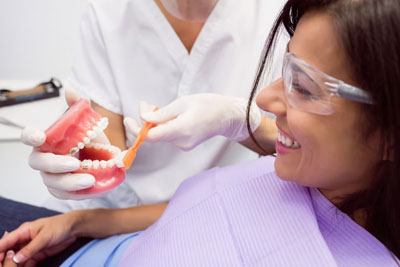
Crown and bridge work is a common dental restoration procedure used to restore or replace missing or damaged teeth. It involves the placement of dental crowns and bridges to improve oral function and aesthetics. Here's an overview of crown and bridge work:
Dental crowns are custom-made caps that cover the entire visible portion of a tooth. They are used to restore the shape, size, strength, and appearance of a tooth that is damaged, weakened, or discolored.
Crowns can be made from various materials, including metal ,porcelain, ceramic, zirconia.
Dental bridges are used to replace one or more missing teeth by "bridging" the gap between healthy teeth or dental implants. They restore oral function, prevent adjacent teeth from shifting, and improve aesthetics.
There are different types of dental bridges, including traditional bridges (anchored to natural teeth), cantilever bridges (anchored on one side), and implant-supported bridges (anchored to dental implants).
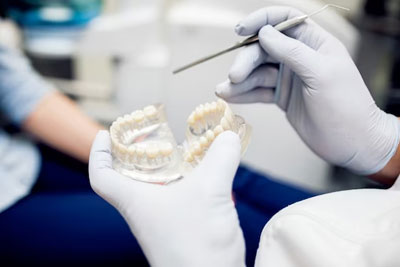
Both complete and partial dentures are removable and serve to replace missing teeth, enabling improved chewing, speaking, and aesthetics.
Complete dentures are used when all natural teeth in the upper or lower jaw are missing. They replace an entire arch of teeth.
Partial dentures are used when some natural teeth remain in the upper or lower jaw. They fill gaps left by missing teeth, restoring both function and appearance.
They often have clasps or connectors that attach to existing natural teeth for stability.
Dentures are typically made of acrylic resin or a combination of acrylic and metal for added strength.