
Invisalign is an orthodontic treatment that straightens teeth without the use of metal or ceramic braces. Invisalign is a series of custom-made clear braces that cover your teeth and gently pull them into the proper position over time. Because they are clear and can be taken on and off, they are less noticeable than traditional metal braces.
Most people want to improve their smile but think that traditional, metal braces are the only option. With Invisalign clear braces there are no metal brackets or wire to detract from your smile while undergoing treatment. With Invisalign clear braces, your teeth can be comfortable, beautiful, and precisely aligned in half of the time it would require with traditional braces. Whether you are a parent exploring orthodontic treatment for your teenager, or an adult who has put off treatment for years, Invisalign is an effective and discreet solution.
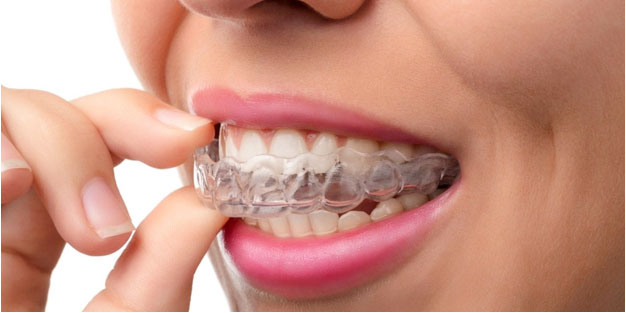 What Is Invisalign Made From?
Invisalign clear aligners are made from smart track material and they are far more comfortable than traditional metal braces. These customized clear aligners are used to straighten your teeth and give you the beautiful smile you’ve always wanted. Before you receive Invisalign clear aligners, you’ll have a consultation with us to discuss your smile goals as well as what you can expect with your treatment. Learn more on the Invisalign website.
If Invisalign is right for your case, we’ll use the examination, along with x-rays, and a 3D model of your teeth to establish a personalized treatment plan for you. The treatment plan determines how your teeth need to shift and how long it will take to align them correctly. The x-rays, 3D model, and pictures of your teeth are sent to the Invisalign laboratory where your customized aligners are crafted. The 3D model of your teeth will also allow you see how Invisalign will progressively correct your orthodontic issues.
When we receive your first set of aligners, you come to our office to check for fit and make any necessary adjustments. You will wear your aligners all day, every day, except when you eat, floss, and brush your teeth. Because Invisalign braces are removable, you will be able to briefly remove them any time you need to throughout the day.
Wearing Invisalign is easy and fits smoothly into your normal day. When you receive your aligners, you will place the clear braces over your teeth. You will wear each set of aligners for two weeks and will then switch to the next set of aligners. At first, your aligners will fit tightly because they are designed to gently and precisely move your teeth. After a few days, your teeth will gradually move to a new position. You will notice that your aligners will feel a little loose after some time has passed. Even if they start to feel loose, don’t switch them early. Wear them for the entire two weeks. This gives your teeth and gums time to adjust to the new position. Switching aligners too early will interfere with your treatment plan.
Every six weeks, you will have an appointment in our office to check your aligners and the progress of your treatment. These checkups also help us determine if any adjustments need to be made to the aligners or to your treatment plan.
One of the best reasons to invest in Invisalign is how comfortable these aligners are to wear. Remember that your teeth are shifting into a new position, so you can expect to feel some mild discomfort as they move, especially with the first set of aligners. The pressure you will feel on your teeth when you first put on a new set of aligners will gradually fade over the course of a few days. If you feel any significant discomfort or pain, give us a call. We’ll schedule an appointment with you to take a look at your teeth, gums, and aligners to ensure a proper fit.
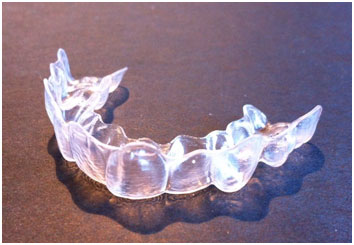
The average Invisalign treatment time is one year but treatment time for will vary based on the age and specific needs of each person. Each case is different, so after your teeth are examined and digital images are captured, you’ll receive an estimated treatment time.
When considering your orthodontic treatment options, it’s important to know the advantages of Invisalign over traditional braces.
The cost of Invisalign depends on your case – the severity of the misalignment of your teeth and how long it will take to move them to the correct position. After we examine your teeth, the x-rays, and 3D model, we will let you know the details of your treatment plan, as well as the cost.
After any orthodontic treatment, whether it’s Invisalign or anything else, we recommend that you wear a retainer. A retainer is designed to keep your teeth in alignment. Without it, your teeth can gradually move back to their former position. If your teeth start to shift, you may need to temporarily wear aligners again to reposition them. We will determine which type of retainer is best for your individual needs.
Initially, your Invisalign-trained doctor will take photos, X-rays, and digital scans or a dental impression to help create your treatment plan.
The maker of Invisalign clear aligners will then use these records, along with the treatment prescribed by your doctor to create a customized 3D treatment plan just for you. With the treatment plan, you’ll be able to see the final position your teeth are predicted to reach after treatment. This treatment plan is used to develop your customized aligners and also estimate the likely length of your treatment.
The customized aligners will be manufactured and shipped to your doctor’s office.
Your series of custom-made aligners will be given to you (typically 3-4 sets at a time) for you to wear every day and change them at home every 2 weeks.
You’ll be visiting your Invisalign-trained doctor approximately every 6-8 weeks to monitor the progress of your treatment and receive the next series of aligners.
After you’ve finished your Invisalign aligner treatment, you may need to use retainers to help make sure the new position of your teeth is maintained.
There are several advantages to getting Invisalign instead of opting for traditional metallic braces. Here are some pros of the clear set of aligners:
Invisalign is much more physically comfortable to wear. Since there are no wires or brackets, you don’t have to worry about getting any painful nicks or cuts in your mouth. They are smooth and won’t irritate your mouth. The aligners are similar to a mouthguard and lack any sharp edges.
Since Invisalign is clear, it doesn’t leave you with a mouth full of metal. In other words, they are more attractive to the eye, and most people won’t even know you are wearing them. That means you can feel free to smile and don’t have to feel overly self-conscious. Because of this, there is no age restriction and adults often prefer this method of orthodontic treatment.
Invisalign has become a norm for straightening the teeth, which means that you don’t necessarily have to deal with metal braces. This makes them very convenient, especially as they are available on a widespread scale.
Invisalign aligners can be removed for eating, brushing your teeth and flossing. That is something that cannot be done with braces. It allows you to eat foods you want and practice better oral hygiene, which helps to lower your risk of developing gum disease while you go through the process of straightening your teeth. You won’t have to worry about food particles getting stuck, which happens with traditional braces.
Invisalign aligners require minimal maintenance. They can get dingy over time when you wear them, but you can freshen them by using a toothbrush dipped in a small amount of soap and water. Scrubbing them for a minute will eliminate any stains. You only need to do this every other day.
With regular braces chances of broken brackets and the wire hurting your gums or cheeks is there for which you need to visit your dentist, however with Invisalign you are free from these hassles and need to visit your dentist only once in 4-6 weeks.
Unfortunately, there are also some disadvantages to Invisalign. Here are the cons of the clear aligners:
One of the biggest cons of Invisalign is that they are expensive as compared to your metal/tooth-colored braces.
Invisalign must be worn a minimum of 22 hours per day. Typically, you are only supposed to remove them for eating and practicing daily oral hygiene. That means that if you are heading out for a dinner or going to a party, you will have to wear them.
Getting new Invisalign aligner trays can be uncomfortable and even mildly painful when you get fitted for a new set. Although the orthodontist most likely refers to the feeling as “pressure,” it can be uncomfortable as your teeth are adjusting to a new set of aligners. You may want to use a pain reliever to help with this pain while your teeth adjust to your Invisalign.
Invisalign aligners can be cumbersome for some patients. You always have to remove them for eating, which means you may deal with some embarrassment when you go out to eat.
When there isn't enough space for your teeth to fit normally in the jaws.
When one or more of your upper teeth protrude over your lower teeth.
When one or more lower teeth protrude in front of your upper teeth.
When both upper and lower teeth are forced outwards so that they don't touch each other.
When one or more of the upper teeth bite on the inside of the lower teeth.